
Beyond the Classroom: How Extracurricular Activities Can Strengthen a Student’s Future
Strong grades are important, but a student's education is about more than what happens inside the classroom. The activities students choose outside of school can help them discover their interests, develop valuable skills, and prepare for college and future careers.
From joining a robotics club to volunteering in the community, extracurricular activities give students opportunities to put their knowledge into practice and learn more about themselves along the way.
For students interested in STEM, these experiences can be especially valuable. The right activities can transform an interest in science, technology, engineering, or mathematics into a clearer vision for the future.
Extracurriculars Help Students Discover What They Enjoy
Choosing a future major or career can feel overwhelming, especially for students who have not had many opportunities to explore different fields.
Extracurricular activities give students a low-pressure way to experiment with their interests.
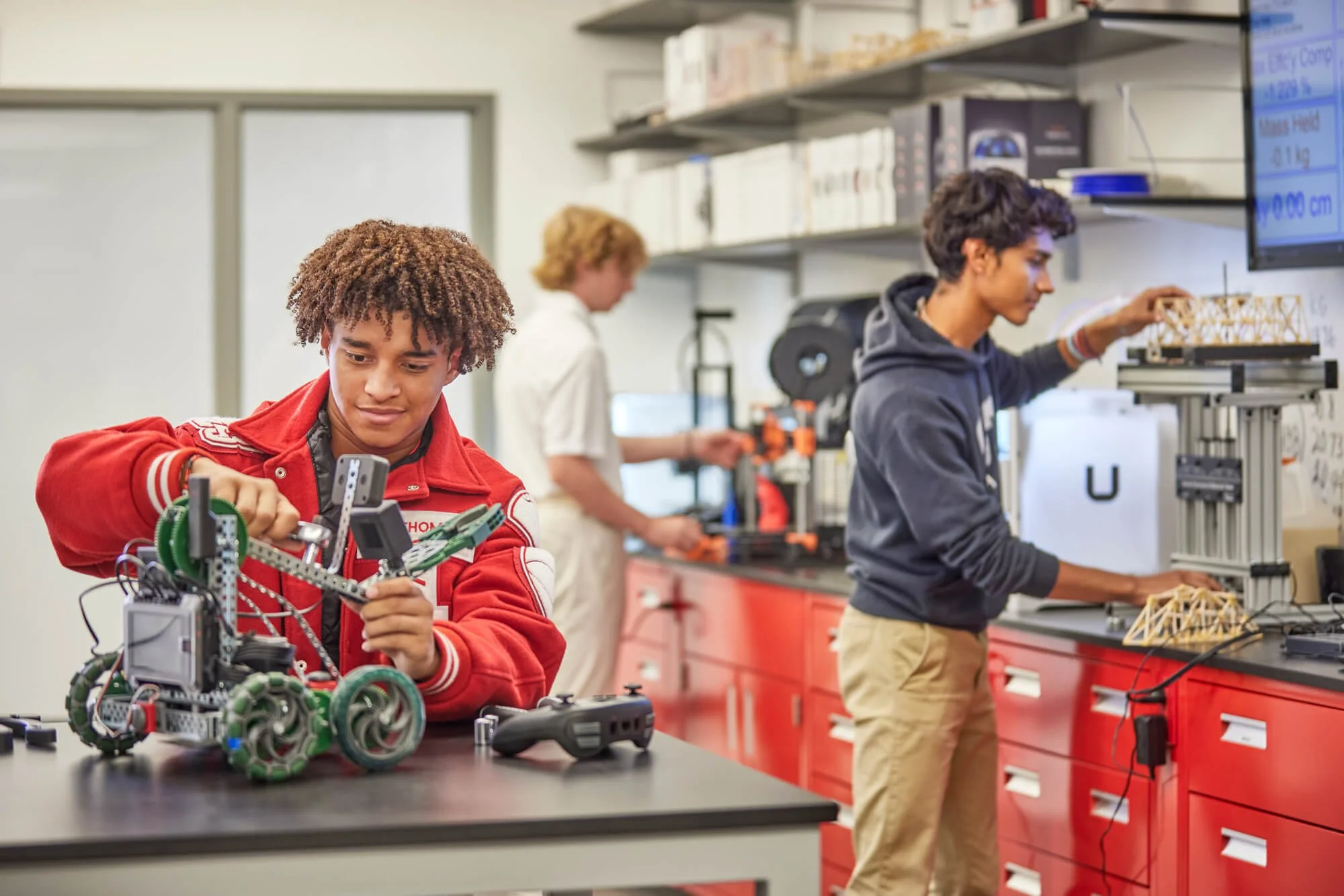
A student who enjoys biology might volunteer at a local environmental organization. Someone interested in engineering could join a robotics club or participate in a design competition. A student who enjoys technology might learn basic coding and create a personal project.
These experiences help students answer an important question: What do I actually enjoy doing?
Sometimes an activity confirms an existing interest. Other times, students discover an entirely new path.
Activities Turn Classroom Knowledge Into Experience
One of the most exciting parts of extracurricular learning is seeing how concepts from class apply to the real world.
Math becomes more meaningful when students use it to analyze data. Science becomes more tangible when they conduct an experiment. Computer science becomes more exciting when they build something that actually works.
Students begin moving beyond simply memorizing information for a test. Instead, they learn how to use their knowledge to solve problems, create projects, and answer questions.
That kind of learning can make academic subjects feel much more relevant.
Students Develop Skills Colleges and Employers Value
Extracurricular activities can also help students develop skills that are difficult to learn from a textbook.
Depending on the activity, students may practice:
Leadership
Communication
Teamwork
Time management
Problem-solving
Creativity
Organization
Perseverance
A student organizing a STEM club event, for example, is not only learning about STEM. They are learning how to plan, communicate with others, manage responsibilities, and respond when something does not go according to plan.
These skills can continue benefiting students throughout college and eventually in their careers.
Quality Matters More Than Quantity
Students sometimes believe that a strong college application requires joining as many clubs and organizations as possible.
More is not always better.
Instead of participating in ten activities without becoming deeply involved in any of them, students can focus on a smaller number of experiences that genuinely interest them.
Over time, they might take on additional responsibilities, lead a project, mentor younger students, organize an event, or create something of their own.
Meaningful involvement tells a much stronger story than simply collecting a long list of memberships.
You Don't Have to Wait for an Opportunity
Not every school offers dozens of STEM clubs, research programs, or specialized activities. That does not mean students cannot explore their interests.
Students can create opportunities for themselves.
They might:
Start a small STEM club at school
Complete an independent science or coding project
Participate in an online competition
Volunteer with a community organization
Attend STEM workshops or summer programs
Create educational content about a subject they enjoy
Reach out to teachers or mentors about additional learning opportunities
Initiative itself is an important skill. Students who learn to seek out opportunities are practicing the independence they will need in college and beyond.
Connecting Activities to a Bigger Goal
Extracurricular activities become even more valuable when students understand how their experiences connect.
A student interested in healthcare, for example, might combine strong science courses with community volunteering and a health-related summer program. A future engineer might combine advanced mathematics with robotics, coding, and a personal design project.
There does not need to be a perfect plan from the beginning.
As students explore, patterns often begin to emerge. Those patterns can help them identify potential college majors, programs, scholarships, internships, and career paths.
How Kente Academy Can Help
At Kente Academy, we believe preparing for the future means looking at the whole student.
Academic performance is important, but so are a student's interests, strengths, experiences, and goals.
Through personalized tutoring, academic coaching, and college planning, we help students strengthen their academic foundation while thinking intentionally about what comes next.
Whether a student already knows the STEM career they want to pursue or is still discovering what excites them, having the right guidance can help turn curiosity into direction.
Final Thoughts
Education does not stop when the school day ends.
The clubs students join, projects they create, communities they serve, and interests they explore can all become important parts of their educational journey.
Students do not need to participate in everything. They need opportunities that encourage them to explore, grow, and challenge themselves.
The goal is not simply to build a longer college application. It is to build experiences that help students understand who they are, what they enjoy, and where they might want to go next.
At Kente Academy, we are committed to helping students build that path with confidence, one step at a time.
